Whenever I visit a sento, a Japanese public bathhouse, I look forward to the milk afterward. Every time. The bath is part of the pleasure, but so is deciding what to drink when I get out.
Plain milk, coffee milk, or fruit milk? I choose depending on my mood, though fruit milk wins more often than the others. Then I drink it all in one go.
It might sound like an oddly small thing to plan into a trip. But a hot bath followed by cold milk is something I would love you to try in Japan. Leave a little time after your soak—the visit does not have to end when you step out of the water.
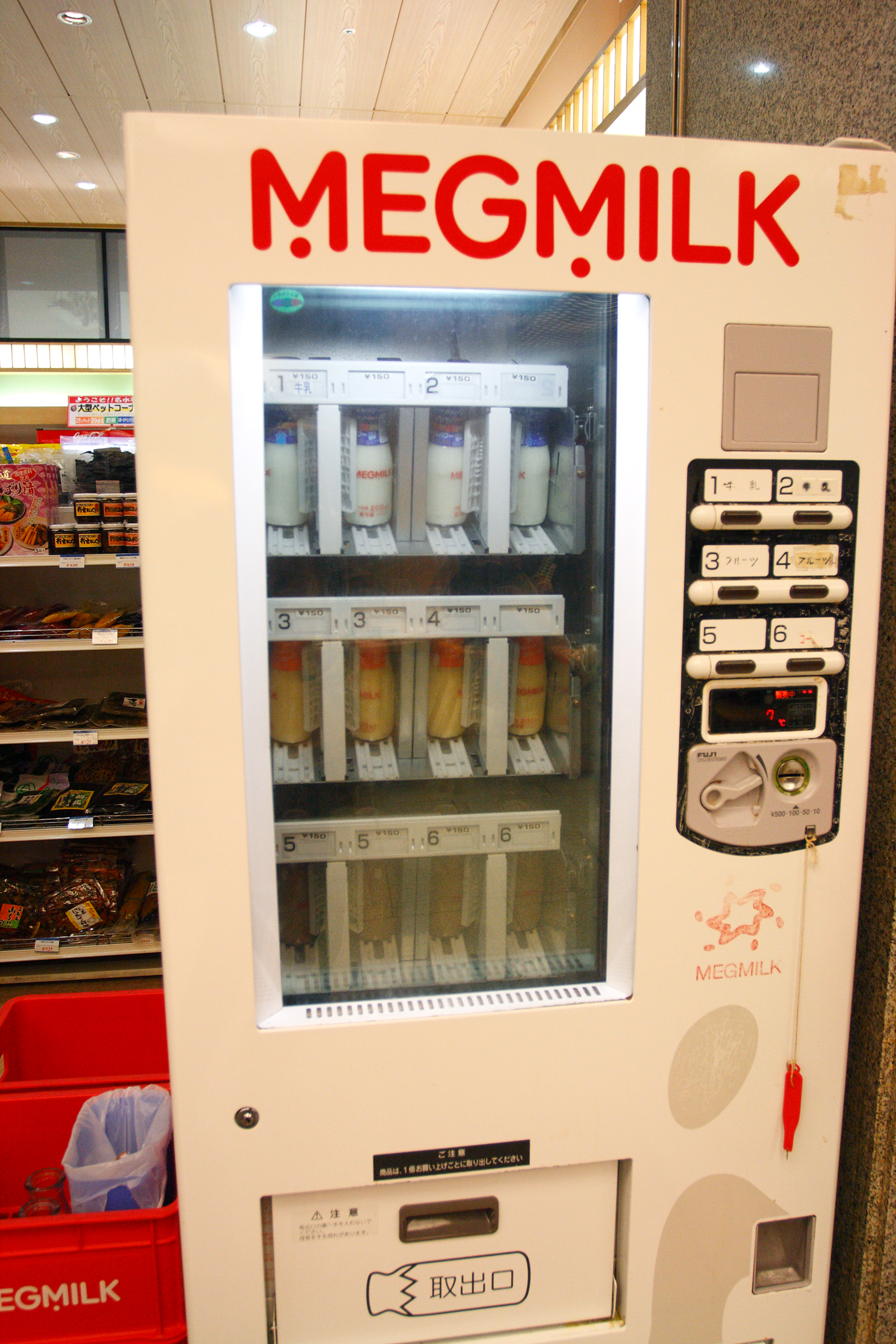
Plain milk, fruit milk and coffee milk in a vending machine at Yumoto Meisuitei, Hokkaido. Photographed in 2009. 瓶ドリンク自販機 (3211152887) — MiNe, CC BY 2.0. Unmodified.
01 — Which milk would you choose?
There are three familiar choices to look for, depending on what the bathhouse sells.
Plain milk — 牛乳 (gyūnyū). The straightforward option if you want the taste of cold milk without added coffee or fruit flavors.
Coffee milk — コーヒー牛乳 (kōhī gyūnyū). A sweet, milky coffee drink. Think of it as a treat rather than a strong iced coffee.
Fruit milk — フルーツ牛乳 (furūtsu gyūnyū). A sweet, fruity milk drink, and my usual favorite. If you have never tried it, this is the one I would suggest starting with.
The last two are familiar everyday names; the product label may simply say “coffee,” “fruit,” or “milk beverage.” Brands, flavors, and packaging vary, and not every sento has all three. Have a look at the fridge before you settle on your choice.
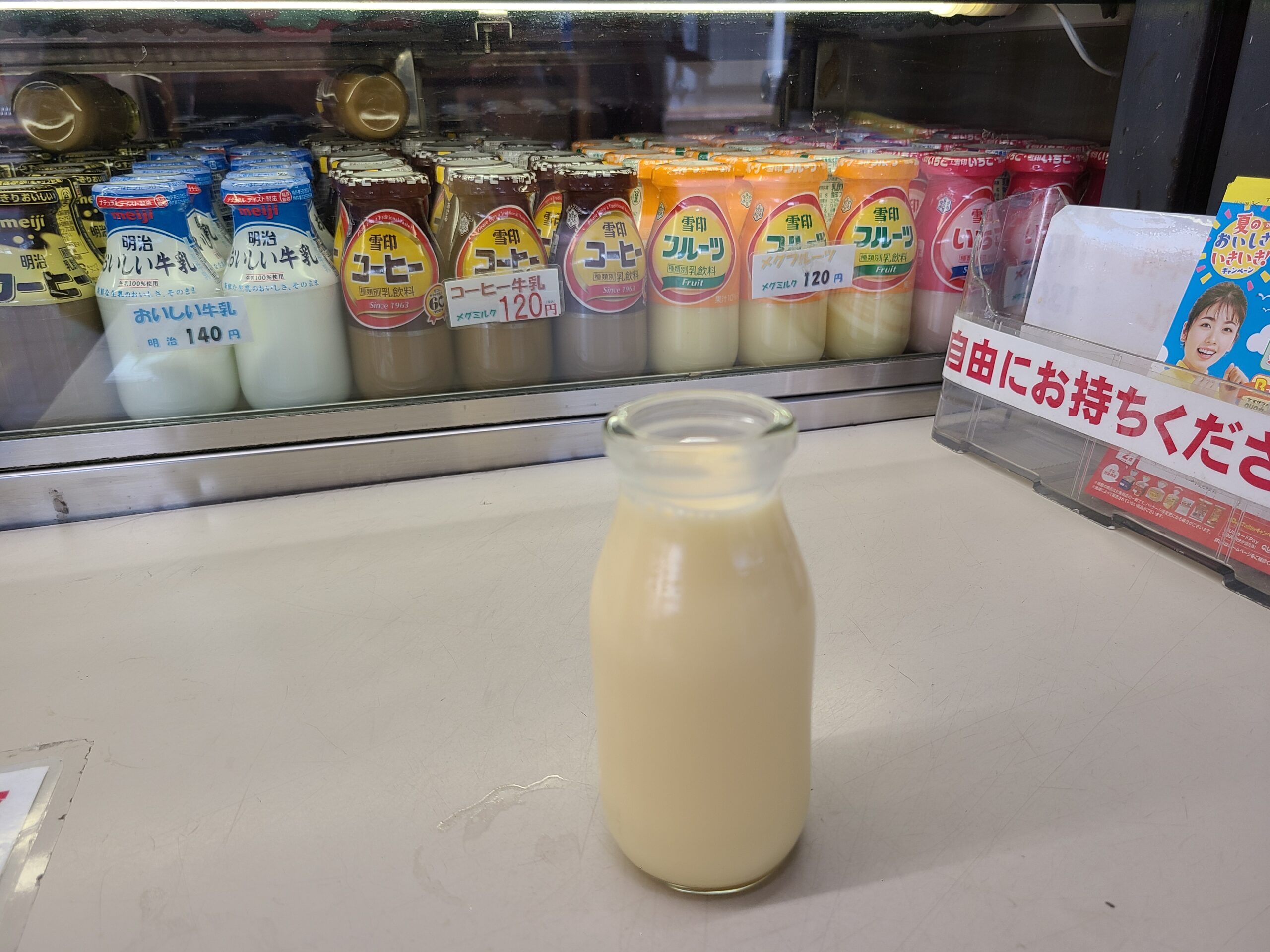
A bottle of fruit milk at a milk stand in Akihabara Station, Tokyo. Photographed in 2022. 雪印フルーツ牛乳 (52210719691) — Iwao, CC BY-SA 2.0. Unmodified.
02 — How did milk become part of a sento visit?
The connection has a practical history. Dairy producer Yamamura Milk traces its spread to around the mid-1950s and 1960s, when refrigerators were still uncommon in Japanese homes. Sento brought customers together, and dairy companies helped put refrigerated milk cases into bathhouses.
Selling cold milk there made sense. Over time, drinking it after a bath became a familiar pleasure. That is the producer’s account of how the custom spread, rather than proof of one definitive birthplace.
Not everyone in Japan drinks milk after bathing. For people like me, though, it is something to look forward to.
03 — Your first bath, then your first bottle
Choose a sento, check its visitor information, and bring a small washing towel and a towel for drying—or check whether rentals are available. At the entrance, remove your shoes and pay the bathing fee. Wash before entering the shared bath, and keep your towel out of the bathwater. Bathing is normally without swimwear.
Afterward, dry off before returning to the changing room. Then comes the milk. Enjoy it in the lobby or another area the bathhouse permits, never in the bathing area. I sometimes drink mine while still in the changing room with a bath towel around my waist. You do not need to copy that; follow the rules for the space you are using, and get dressed before entering a shared lobby.
If you are unsure where to drink or return an empty bottle, ask at the front desk. For a fuller introduction, see the Tokyo Sento Association’s English bathing guide.
04 — A Tokyo sento where you can try it
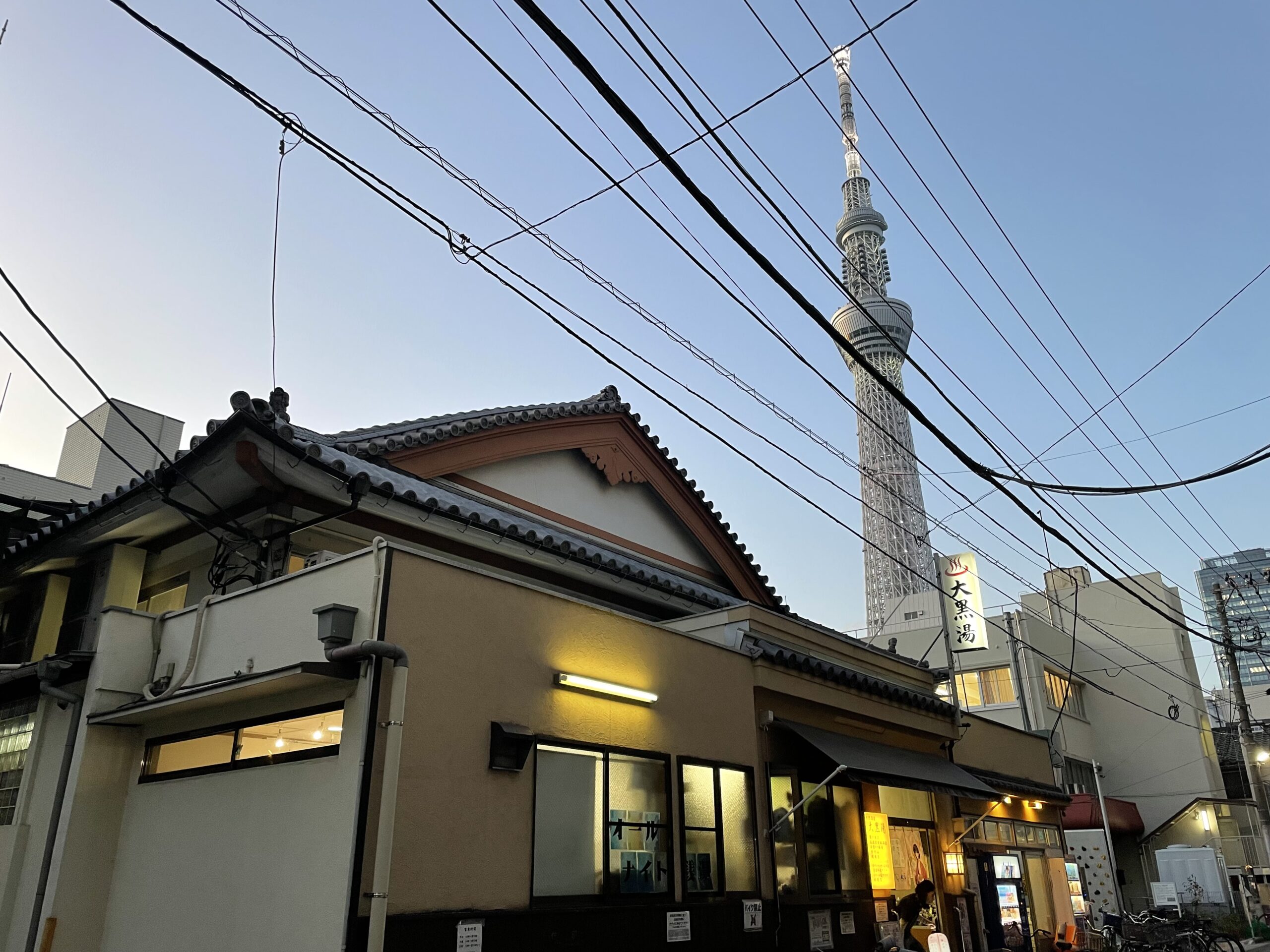
Oshiage Onsen Daikokuyu, near Tokyo Skytree, is one option for a bath-and-milk stop. Its official facilities guide lists plain milk, fruit milk, and coffee milk in the front-desk and lobby section.
The bathhouse has English visitor information, explicitly allows tattoos, and offers towel rentals. Check its official English page for access and its current service information for opening hours, closures, fees, and visit limits. The listed drinks are not a guarantee of stock on the day.
This is a researched suggestion, not a claim that my own milk-drinking memories happened at Daikokuyu.
Oshiage Onsen Daikokuyu, with Tokyo Skytree behind it. Photographed in February 2025. Daikokuyu 250217 2 — Totti, CC BY-SA 4.0. Unmodified.
05 — A few things to check before you go
Tattoo policies belong to each facility: Daikokuyu’s policy does not apply to every sento or spa. Check your chosen bathhouse’s rules and towel arrangements, and leave your phone put away in the changing and bathing areas.
Admission charges and what they include differ between neighborhood sento and larger spa facilities. Use the place’s own website for current prices rather than assuming one price applies everywhere.
Leave time for the milk
You can buy a cold drink elsewhere, of course. For me, having it after a sento bath is part of the reason to go.
On your next trip, choose a bathhouse and leave a few minutes afterward to try it. Plain, coffee, or fruit? I will probably be choosing fruit again.
Japan luggage forwarding and coin lockers solve different problems. Forwarding moves your suitcase to another destination; a locker keeps it in one place until you collect it.
If you need your bag later today, start with storage. If you can do without it until a confirmed delivery date, consider forwarding.
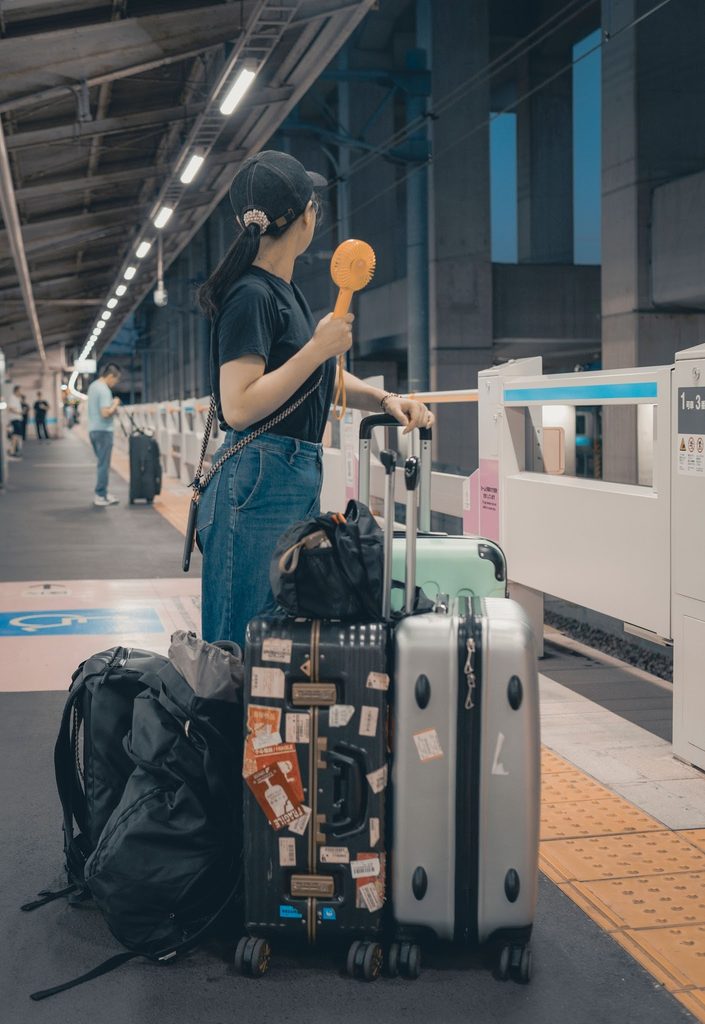
Dragging a suitcase through a crowded station is one of those travel problems that seems small—until you are standing at the bottom of a staircase with a train leaving in four minutes.
The useful question is not which service is best, but which one fits the next part of your trip.
Below, compare the costs, delivery and collection checks, and five itinerary examples—including Tokyo to Kyoto, an overnight stop in Hakone, and sightseeing after hotel check-out.
You may also find that keeping a small bag with you is the simplest choice.
01 — Quick answer: choose by itinerary
Send your suitcase ahead if you will not need it until a later hotel stay and the carrier confirms a delivery schedule that works for you. Keep enough essentials with you until it arrives.
Choose a coin locker or short-term storage if you need the bag again later today. Pick somewhere you can collect it without an awkward detour before your train or hotel check-in.
Keep it with you if you need frequent access, or if the bag is small and your route is straightforward. There is no need to book anything just because luggage services are available.
Next, check the practical detail that could upset the plan: delivery time for forwarding, collection time for storage, or how easily you can manage the bag yourself.
At a glance
Option
Best when
Access to bag
Rough cost
Luggage forwarding
Next hotel / overnight detour; delivery timing fits
Prices vary by station and size. Some lockers cost around ¥500 (small), ¥700 (medium), and ¥900 (large)
Carry it yourself
Small bag / simple route
Always
¥0
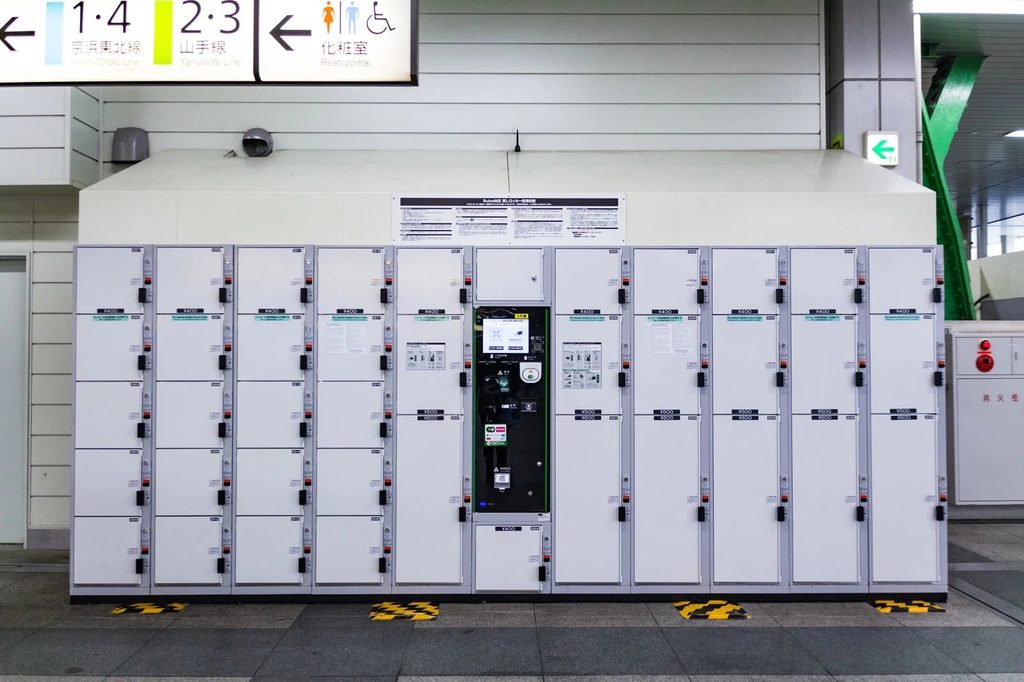
Coin lockers at a Japanese station offer short-term storage in several sizes.
02 — When luggage forwarding is the better choice
Forwarding can take a large suitcase out of the part of your trip that involves stairs, crowded platforms, and several transfers.
Start with a familiar example: Tokyo hotel → Kyoto hotel. If you can manage without your suitcase until its confirmed delivery window, ask your Tokyo hotel whether it can arrange shipment and your Kyoto hotel whether it will accept the bag. If you need it that evening and arrival is not confirmed, keep it with you instead.
An overnight stop can make forwarding even more useful:
Tokyo → one night in Hakone, a popular hot-spring stop near Tokyo → Kyoto
You could send the large suitcase from Tokyo to Kyoto and take a small overnight bag to Hakone. Check the delivery date first, then pack enough clothing and toiletries to cover the time until your suitcase arrives.
Before handing it over, confirm the destination address, your booking name and check-in date, and when someone can receive it.
When sending luggage to a hotel or ryokan with Yamato Transport, confirm in advance that the accommodation agrees to receive it. Yamato’s hotel-delivery guidance says to send the luggage before the local cut-off time at least two days before check-in; depending on the distance, three days may be necessary. Check the applicable sending deadline and expected delivery date with Yamato, and confirm receipt and collection arrangements with your accommodation. Do not assume next-day delivery or a specific delivery time.
Keep your passport, valuables, medication, and anything you need on the journey with you, and save the shipment receipt or tracking details.
For a rough cost reference, Yamato Transport’s current published cash rates from the Kanto region to Kansai are ¥2,780 for size 140 and ¥3,160 for size 160. Actual costs can differ depending on the counter, hotel service, route, and any additional handling conditions. Size 140 and 160 refer to a maximum length + width + height of 140 or 160 cm, with weight limits of 20 or 25 kg respectively; exceeding either limit can move the bag into a higher size category.
Disclosure: This article contains affiliate links. If you book through them, Rambling Japan may earn a commission. We only include services when they fit the travel situation described.
If your trip is within Tokyo, or between a Tokyo hotel and Narita or Haneda Airport, the Klook service below is one option to check. This specific product is for supported Tokyo-area routes; it is not the Tokyo → Kyoto forwarding service described above.
Before booking, select your exact route and check hotel coverage, drop-off deadlines, the delivery or collection window, accepted bag sizes, and the total price. For an airport transfer, the bag must be available early enough for your flight check-in—not simply arrive sometime on the same day.
An unattended apartment needs a different plan. Yamato’s traveler guidance says its pickup and delivery services are not available at Airbnb-style properties without reception staff. Ask the carrier about an eligible pickup point, or carry the bag between accommodations and use storage during sightseeing. Do not send it to an unmanned address on the assumption that someone will accept it.
Traveling through a Japanese station with luggage can make transfers more cumbersome.
03 — Coin lockers in Japan: prices, bag size and collection time
If you have checked out but still have a few hours to explore, a locker can be an easy way to get your hands back.
Many stations and transport hubs have coin lockers, with accepted payment methods depending on the locker. Prices and charging rules vary by operator, location and locker size. For a specific example, JR East Smart Logistics’ March 4, 2026 announcement for MULTIECUBE lockers at Kansai International Airport listed ¥500 for small, ¥700 for medium and ¥900 for large units, with other sizes also available. It listed a separate ¥500 advance-reservation fee and an additional daily storage charge when use continues past 2:00 a.m. into the next day. These are the published terms for that example, not nationwide rules or a guarantee of today’s price. Check the posted price, internal dimensions, access hours, payment options and daily charging boundary at your chosen locker.
An empty locker is useful only if your bag fits and you can return in time. Large units may already be occupied, so leave a little time to find another option rather than making storage the last task before your train.
A locker is a good fit when:
you will return to the same station or nearby area;
you need the bag again later that day;
the bag fits and you can collect it within the access hours; and
you have a backup if the right locker is unavailable.
If collecting the bag would mean crossing the city again, look for storage near your onward departure point—or keep the bag with you if that is simpler.
04 — Five real itinerary examples
1. Tokyo hotel → Kyoto hotel
Best fit: forwarding if the delivery schedule works.
Confirm the arrival window before sending. You can then travel with a smaller bag; if you need the suitcase before delivery, carrying it is the safer plan.
2. Check out in Shinjuku at 10 a.m. → evening train from Shinjuku
Best fit: coin locker or nearby storage.
First ask whether your hotel can hold it after check-out, especially if you will pass that way again. Otherwise, a locker or nearby storage keeps collection close to your evening departure.
3. Tokyo → one night in Hakone → Kyoto
Best fit: luggage forwarding plus a small overnight bag.
Arrange delivery to match your Kyoto stay, then pack for Hakone and any extra time before the suitcase arrives. This saves hauling a large bag through the overnight stop.
4. Day trip from Tokyo with one carry-on
Best fit: carry it, unless it would get in the way.
A small bag on a simple route may be easier to keep with you. Use a locker only if the time without it would be worth the fee and collection stop.
5. Self-check-in apartment → another self-check-in apartment
Best fit: carry it unless an eligible receiving point is confirmed.
Storage can free you up for sightseeing, but it does not move the suitcase to the next apartment. You still need a workable collection and onward-transport plan.
05 — Lockers full or suitcase too big? Other luggage storage options
A locker is no help if it is full or your suitcase will not fit.
First, check another locker area or a staffed baggage counter at the station. You can also ask your hotel whether it can hold your bag before check-in or after check-out. If either fits your route, you may not need a separate booking.
Before leaving your bag, confirm when you must collect it and whether you will need a train ticket to reach the storage area again.
If those options do not work, compare a bookable luggage storage location near the station you will actually depart from. A short walk on arrival can become an inconvenient detour when you return for your suitcase.
Bounce is one option to check when you want to reserve storage rather than search for an empty locker.
Enter your location and dates, then compare the available drop-off and collection times, accepted bag type, walking route and total booking price. Availability and conditions depend on the selected location.
Book only after confirming that the location accepts your bag and will be open when you return.
If a suitable locker or hotel storage is more convenient and costs less, use that instead. A reservation is useful when it solves your particular problem; it is not automatically better than a locker.
06 — When carrying it yourself is simpler
Sometimes the easiest luggage plan is to keep the bag and get on with your trip.
One small suitcase, a direct train, a manageable route, and little time between check-out and check-in may not justify delivery paperwork or an extra storage stop. Consider your own mobility and energy, too: a route that looks short on a map may still feel difficult with a heavy bag.
If you will need things from the suitcase throughout the day, forwarding may create more problems than it solves. Storage can still help for a sightseeing break, but only if collecting the bag works with your plans.
You do not need a paid service when carrying the bag already works for you.
07 — One Shinkansen luggage rule worth knowing
On the Tokaido, Sanyo, Kyushu, and Nishi-Kyushu Shinkansen, a suitcase whose length + width + height is over 160 cm and no more than 250 cm requires a seat reservation with an oversized-baggage area. Measure the outside of the bag, including protruding handles and wheels. For example, a suitcase measuring 80 cm × 50 cm × 35 cm has a total of 80 + 50 + 35 = 165 cm, so it falls into this category.
There is no extra charge for reserving the designated oversized-baggage seat beyond the applicable reserved-seat fare. Bringing qualifying oversized baggage without the required reservation incurs a ¥1,000 baggage fee, and staff will direct you where to store it.
A total of exactly 160 cm or less does not require this oversized-baggage reservation, though you still need a suitable place for the bag. Bags over 250 cm in total cannot be brought on board. If your large suitcase qualifies, reserving the right seat may be all you need; forwarding is another option only if you can do without it until delivery.
Only on eligible routes and within the service’s deadlines. Ask for the actual arrival or collection window: “same day” may still be too late for your hotel plans or flight.
For a city-to-city trip, do not send the bag on the assumption that it will arrive that evening.
Can I forward luggage to an Airbnb or self-check-in apartment?
Do not assume that you can. Yamato’s traveler guidance excludes properties without reception staff from pickup and delivery.
Other services have their own conditions. Confirm an eligible receiving arrangement with both the accommodation and carrier before paying or sending anything.
Are coin lockers always available at major stations?
No. Allow time to check another locker area or a staffed baggage counter, and confirm access hours for wherever you leave the bag.
If having a place reserved matters more than searching on arrival, compare a bookable storage location.
What if my suitcase does not fit in a coin locker?
Check a larger unit or a staffed baggage counter, then compare storage locations that explicitly accept your bag.
Confirm the size conditions, opening hours and total price before booking.
Forwarding is a different solution: it moves the bag elsewhere, so use it only if you will not need the suitcase before its confirmed arrival.
Which option is cheapest?
Carrying the bag has no added storage or delivery fee.
For a few hours without it, compare a suitable locker with any hotel storage available to you and the total quoted price of a booked location.
Forwarding serves a different need. Pay for it when avoiding the journey with a heavy bag is worth the cost and the delivery schedule works.
09 — The simple rule
Before booking anything, bring the decision back to your own plans:
When do I need this bag again?
Not until a later hotel stay → consider forwarding, after confirming arrival and receipt.
Later today → choose storage you can collect from in time.
Soon, or often during the day → keep it with you if you can manage it.
There is no prize for using an extra service. Choose the option that gives you a more comfortable day without creating a new problem at collection or delivery.
That is the side of everyday Japan Rambling Japan is interested in: not just what exists, but how people actually use it.
When you come to Japan, you can visit temples and shrines, eat incredible food, and explore all the famous sights.
Sounds great, right?
But here at Rambling Japan, there’s one place we’d love you to make a little detour to.
A supermarket.
“Wait… I came all the way to Japan, and you want me to visit a supermarket?”
Fair question.
But for those of us who live here, this is where everyday life is sitting right out in the open.
You buy bread, look at the meat, choose a bottle of seasoning, and maybe spot something with a discount sticker on it.
Most days, I walk through without thinking twice.
This time, though, I walked around my usual supermarket with one goal: to show you a little bit of everyday Japan.
And it turned out to be more interesting than I expected.
There were plenty of things I see all the time—but had never really stopped to look at.
So today, instead of visiting a famous tourist spot, come take a walk through an ordinary Japanese supermarket with me.
01 — Japanese soy sauce: why are there so many kinds?
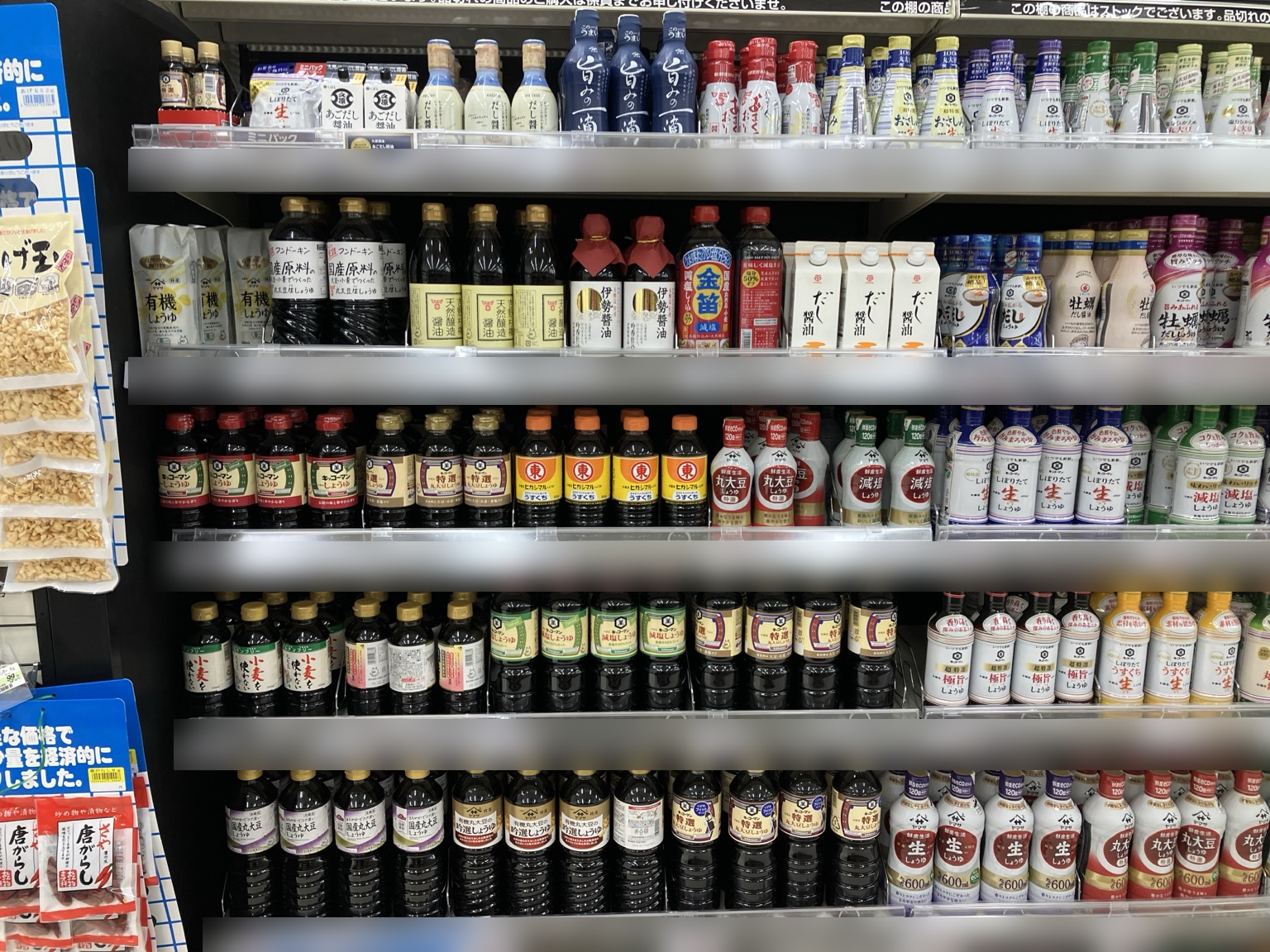
The first place that stopped me was the soy sauce aisle.
Looking at it properly, I had one thought:
That is a lot of soy sauce.
Japanese soy sauce is officially divided into five main types: koikuchi, usukuchi, tamari, saishikomi, and shiro.
Koikuchi is the most common. Usukuchi is lighter in color and has deep roots in western Japan, including Osaka and Kyoto. It’s often used in dishes such as udon broth and simmered foods where cooks want to preserve the natural colors of the ingredients.
Then there’s rich tamari, twice-brewed saishikomi, and the very pale shiro.
Japan also has more than 1,000 soy sauce makers.
And it gets even more specific.
There’s even soy sauce made especially for sashimi. Some products are adjusted in flavor and thickness to pair with raw fish. You’ll also find seasonings made for particular dishes, such as tamago kake gohan—hot rice topped with raw egg.
Every country probably has foods or seasonings so deeply tied to its food culture that outsiders wonder, “Why are there so many kinds?”
In Japan, soy sauce is definitely one of them.
If you visit a Japanese supermarket, take a look down the soy sauce aisle.
It might be longer than you expect.
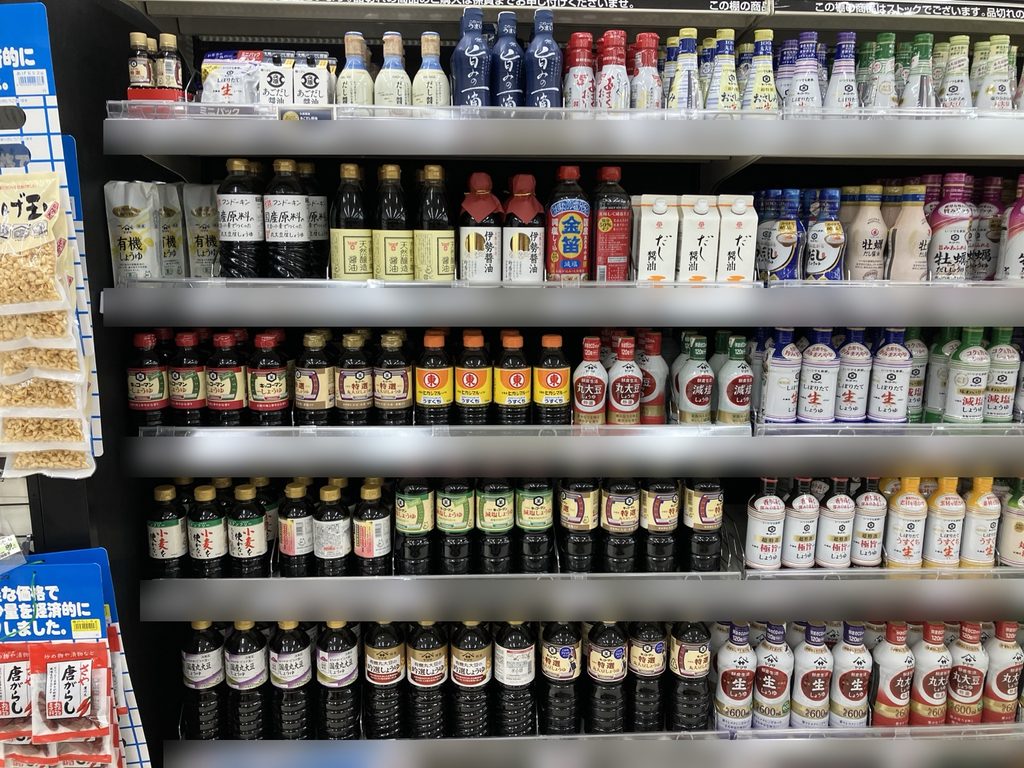
A typical soy sauce aisle in a Japanese supermarket. Look closely and you’ll find plenty of different types and uses.
02 —Japanese supermarket bread: anpan, melon pan and more
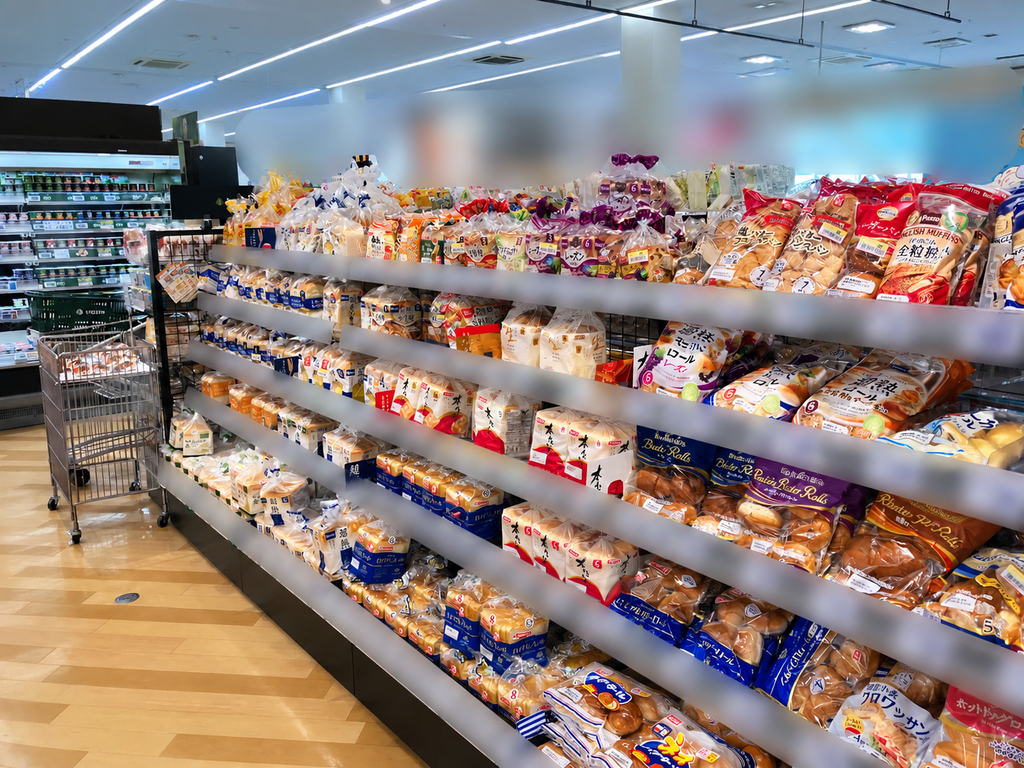
Next stop: bread.
And we’re not talking about sliced bread alone.
There’s anpan, a soft bun filled with sweet red bean paste, and melon pan, a sweet bun topped with a crisp, cookie-like layer.
Then there’s curry pan, bread filled with Japanese curry and usually fried.
And yakisoba pan—that’s stir-fried noodles inside a bread roll.
Yes.
Noodles.
Inside bread.
Sweet bread next to curry. Curry next to noodles in a roll.
For people in Japan, this is a completely normal bread aisle. But when you actually stop and think about what’s on those shelves, it’s wonderfully free-form.
Even ordinary sliced bread might be sold sliced into four, five, or six pieces.
This time, instead of walking past as usual, I stopped for a moment and looked at the whole shelf.
Was there always this much bread?
If you’re traveling in Japan, picking one thing that makes you wonder “What does anpan taste like?” or “You put yakisoba inside bread?” could be a fun little experiment.
For a first visit, try looking for anpan if you like sweet red bean paste, melon pan for its crisp cookie-like top, or curry pan for something savory. And if noodles in a roll make you curious, look for yakisoba pan.
The choices vary by store. That is part of the fun: seeing what is on the shelf in front of you.
An everyday bread aisle in Japan—from sliced bread to sweet and savory options.
03 — Japanese supermarket discount stickers: 20% off and half price
I was still doing my normal shopping when something caught my eye.
A discount sticker.
I won’t lie. Finding one makes me a little happy.
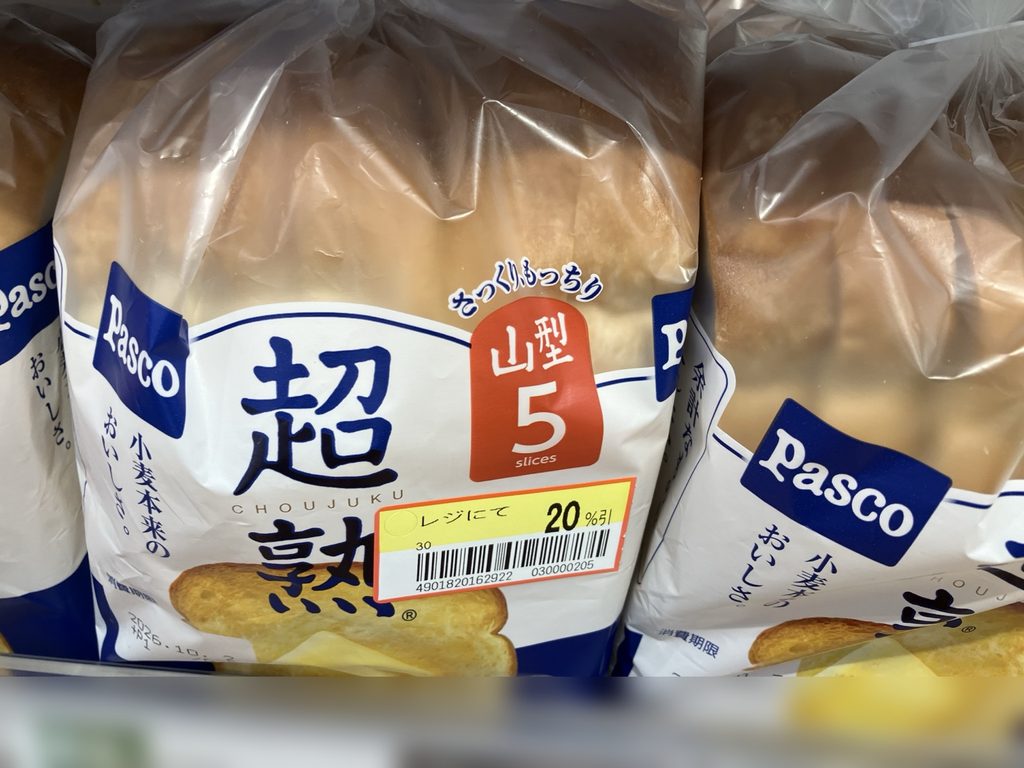
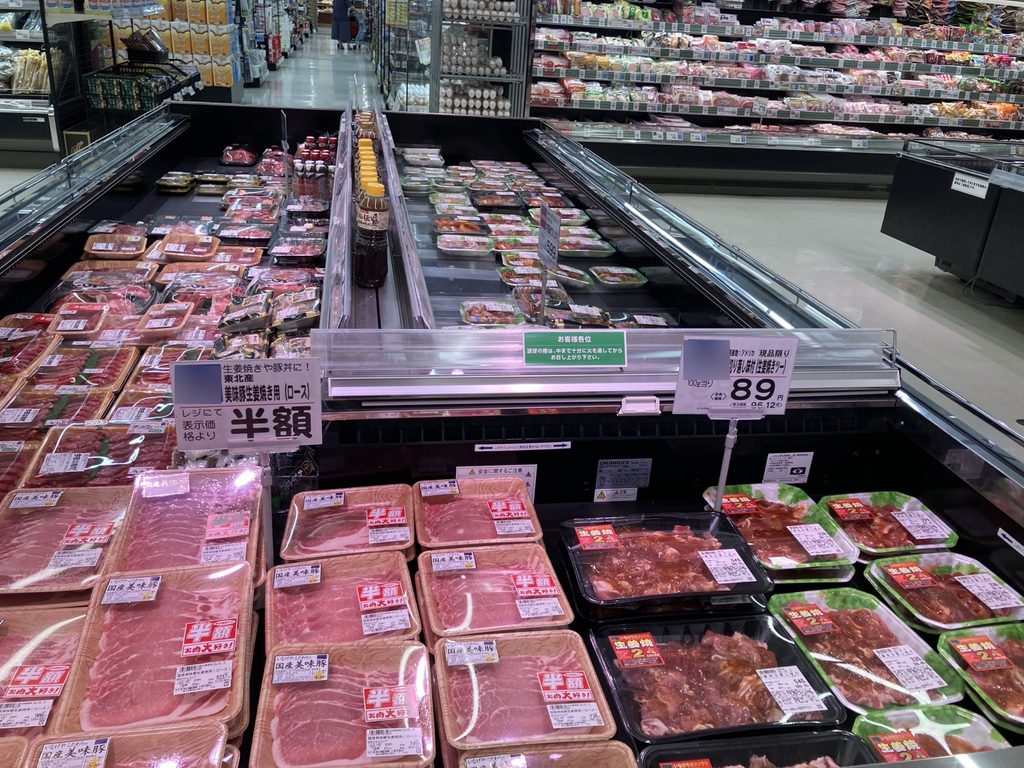
On this visit, I found a loaf of bread marked 20% off. Over in the meat section, some items were marked half price.
If you cannot read the sticker, a few expressions are useful to recognize.
“20%引” or “2割引” means 20% off.
“半額” means half price—50% off.
“50円引” means ¥50 off the original price. It does not mean the item costs ¥50.
Check which product the sticker applies to, and check the product label before buying.
Nothing special was happening. These weren’t discounts for tourists. They were simply sitting there among all the regular products.
I’m not going to tell you there’s one magic time when Japanese supermarkets always start discounting food—it varies by store, product, and day.
But the stickers themselves are a very ordinary part of supermarket life here.
It’s probably not the kind of scene you’ll find in many guidebooks.
But when you see it, you might think:
“Yeah. People actually live here.”
A loaf marked 20% off. Discount stickers are another small part of everyday supermarket life.
Some items in the meat section were marked half price on this visit.
04 — What I bought on this supermarket visit
In the end, I bought my usual sliced bread.
Nothing exotic. Nothing chosen because it looked particularly “Japanese.”
Just my regular shopping.
And I think that’s exactly the point.
Rambling Japan is about looking again at the parts of Japan that feel so ordinary to us that we barely notice them.
“Wow, there really is a lot of soy sauce.”
“Was the bread aisle always this interesting?”
“Oh, 20% off!”
Sometimes that’s enough to make an ordinary place interesting again.
Welcome to everyday Japan
If you’re traveling around Japan and happen to pass a supermarket, go inside when you have a little time.
You don’t have to buy anything unusual.
Check out the soy sauce aisle. Wander through the bread section. See if you can spot a discount sticker.
Around you, local people will be figuring out what to have for dinner tonight or breakfast tomorrow.
That’s everyday Japan.
Rambling Japan will keep looking for the parts of Japan that feel completely ordinary to us—but become surprisingly interesting when we stop and look again.
Take a small detour from the famous sights.
Welcome to everyday Japan.
If you are fitting a supermarket stop between hotel check-out and your next train, decide where your suitcase will go first. Our guide to luggage forwarding and coin lockers in Japan compares storage for a few hours with sending a bag ahead to another hotel.