When you come to Japan, you can visit temples and shrines, eat incredible food, and explore all the famous sights.
Sounds great, right?
But here at Rambling Japan, there’s one place we’d love you to make a little detour to.
A supermarket.
“Wait… I came all the way to Japan, and you want me to visit a supermarket?”
Fair question.
But for those of us who live here, this is where everyday life is sitting right out in the open.
You buy bread, look at the meat, choose a bottle of seasoning, and maybe spot something with a discount sticker on it.
Most days, I walk through without thinking twice.
This time, though, I walked around my usual supermarket with one goal: to show you a little bit of everyday Japan.
And it turned out to be more interesting than I expected.
There were plenty of things I see all the time—but had never really stopped to look at.
So today, instead of visiting a famous tourist spot, come take a walk through an ordinary Japanese supermarket with me.
01 — Japanese soy sauce: why are there so many kinds?
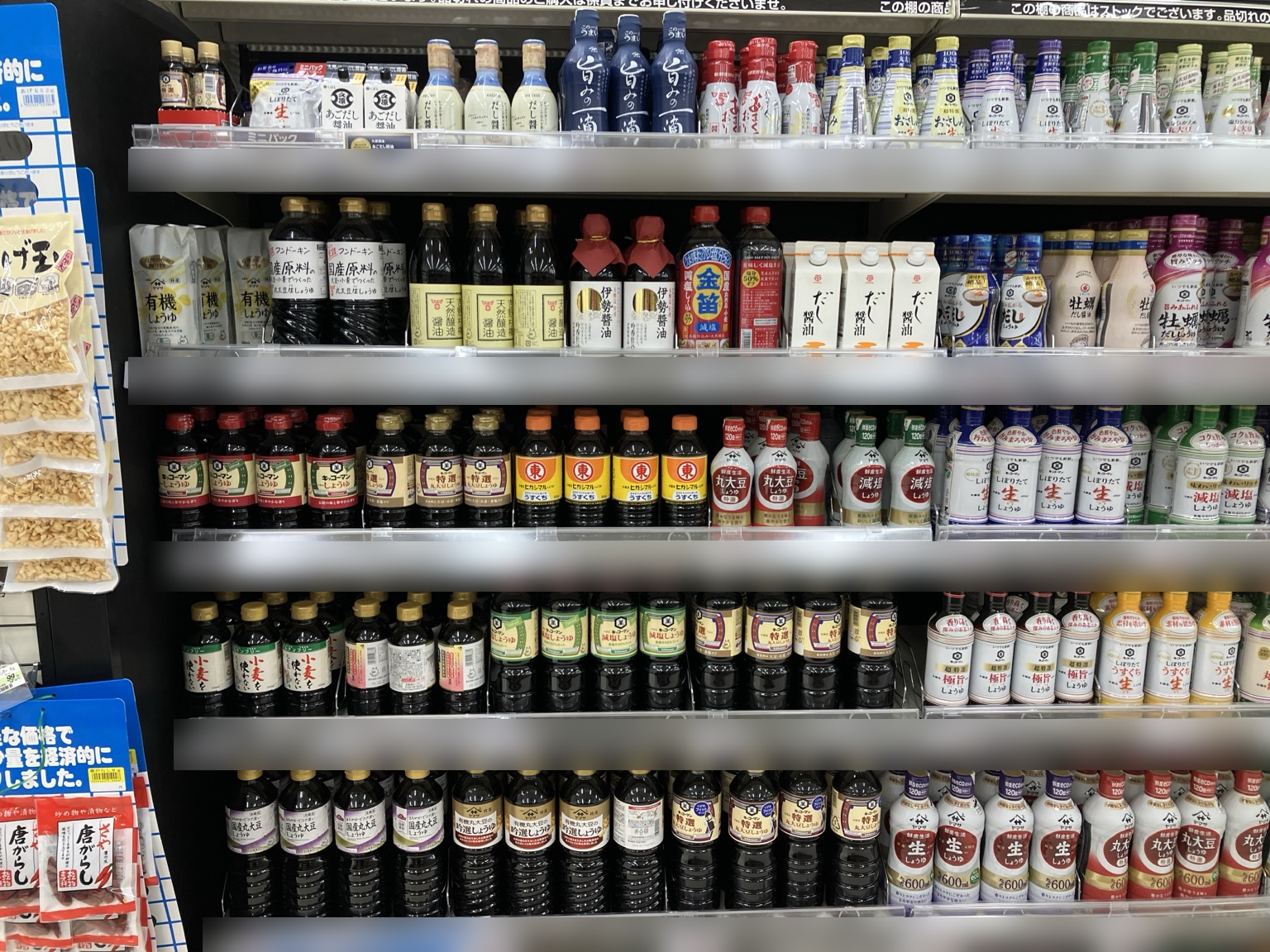
The first place that stopped me was the soy sauce aisle.
Looking at it properly, I had one thought:
That is a lot of soy sauce.
Japanese soy sauce is officially divided into five main types: koikuchi, usukuchi, tamari, saishikomi, and shiro.
Koikuchi is the most common. Usukuchi is lighter in color and has deep roots in western Japan, including Osaka and Kyoto. It’s often used in dishes such as udon broth and simmered foods where cooks want to preserve the natural colors of the ingredients.
Then there’s rich tamari, twice-brewed saishikomi, and the very pale shiro.
Japan also has more than 1,000 soy sauce makers.
And it gets even more specific.
There’s even soy sauce made especially for sashimi. Some products are adjusted in flavor and thickness to pair with raw fish. You’ll also find seasonings made for particular dishes, such as tamago kake gohan—hot rice topped with raw egg.
Every country probably has foods or seasonings so deeply tied to its food culture that outsiders wonder, “Why are there so many kinds?”
In Japan, soy sauce is definitely one of them.
If you visit a Japanese supermarket, take a look down the soy sauce aisle.
It might be longer than you expect.
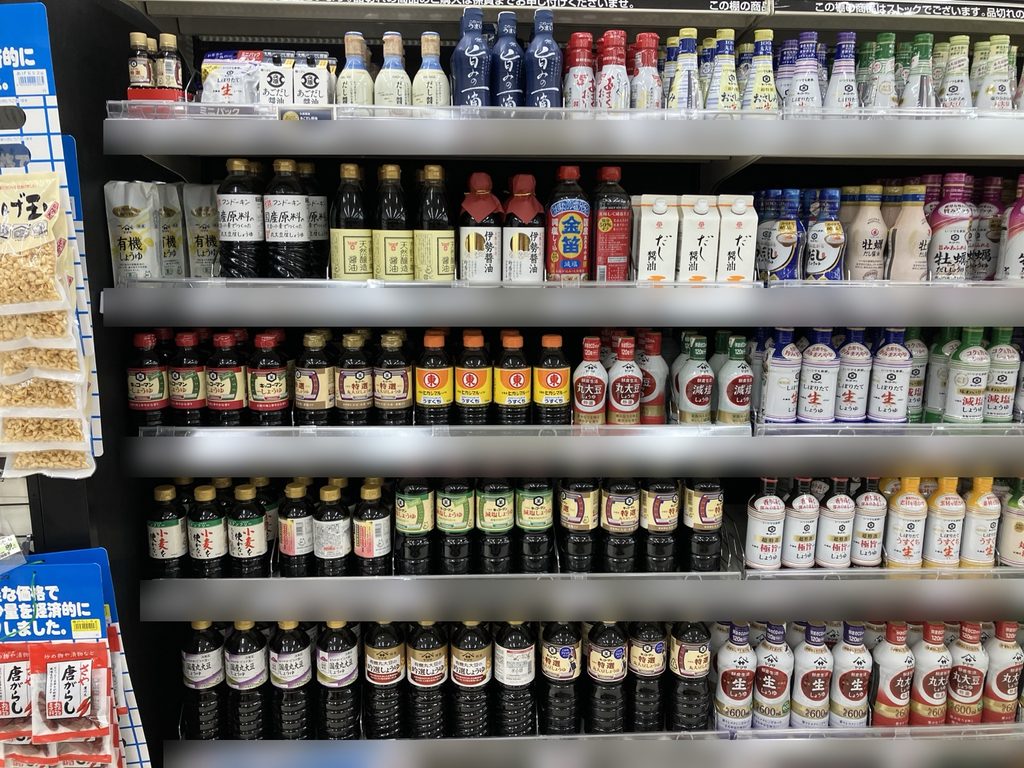
A typical soy sauce aisle in a Japanese supermarket. Look closely and you’ll find plenty of different types and uses.
02 —Japanese supermarket bread: anpan, melon pan and more
Next stop: bread.
And we’re not talking about sliced bread alone.
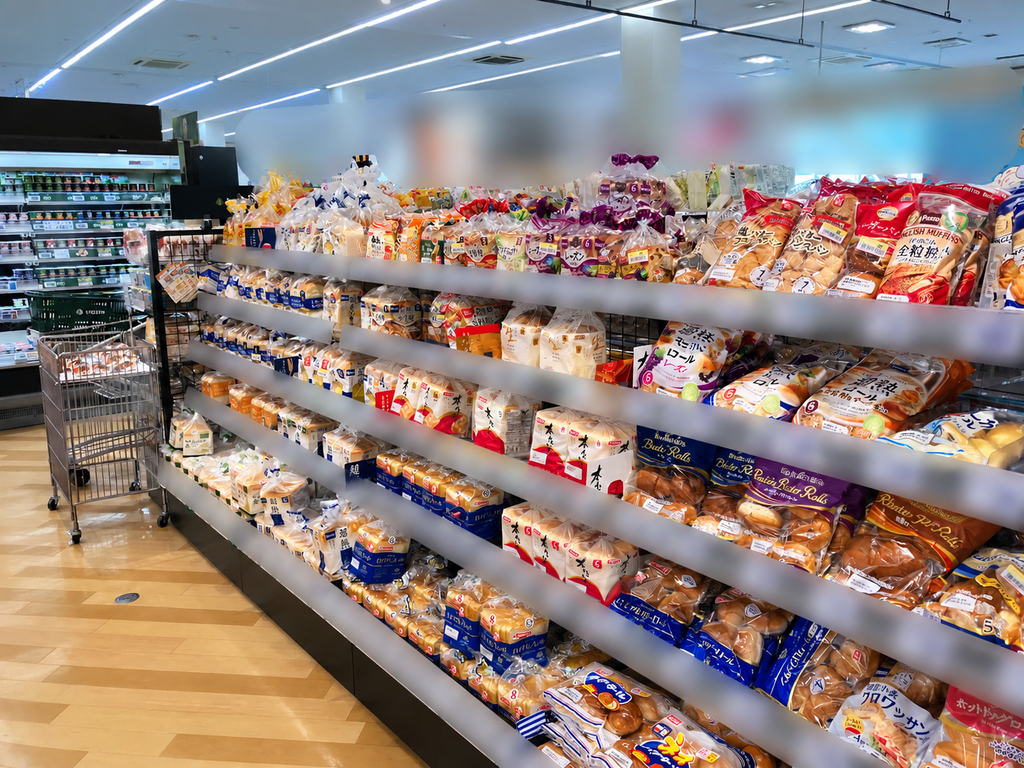
There’s anpan, a soft bun filled with sweet red bean paste, and melon pan, a sweet bun topped with a crisp, cookie-like layer.
Then there’s curry pan, bread filled with Japanese curry and usually fried.
And yakisoba pan—that’s stir-fried noodles inside a bread roll.
Yes.
Noodles.
Inside bread.
Sweet bread next to curry. Curry next to noodles in a roll.
For people in Japan, this is a completely normal bread aisle. But when you actually stop and think about what’s on those shelves, it’s wonderfully free-form.
Even ordinary sliced bread might be sold sliced into four, five, or six pieces.
This time, instead of walking past as usual, I stopped for a moment and looked at the whole shelf.
Was there always this much bread?
If you’re traveling in Japan, picking one thing that makes you wonder “What does anpan taste like?” or “You put yakisoba inside bread?” could be a fun little experiment.
For a first visit, try looking for anpan if you like sweet red bean paste, melon pan for its crisp cookie-like top, or curry pan for something savory. And if noodles in a roll make you curious, look for yakisoba pan.
The choices vary by store. That is part of the fun: seeing what is on the shelf in front of you.
An everyday bread aisle in Japan—from sliced bread to sweet and savory options.
03 — Japanese supermarket discount stickers: 20% off and half price
I was still doing my normal shopping when something caught my eye.
A discount sticker.
I won’t lie. Finding one makes me a little happy.
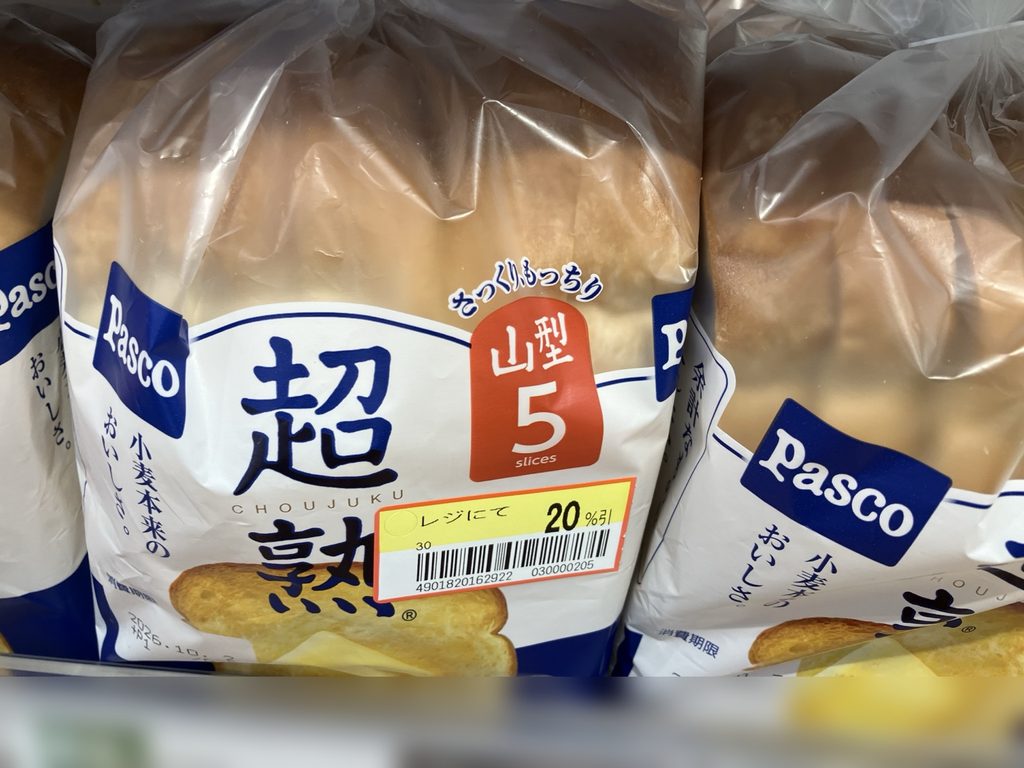
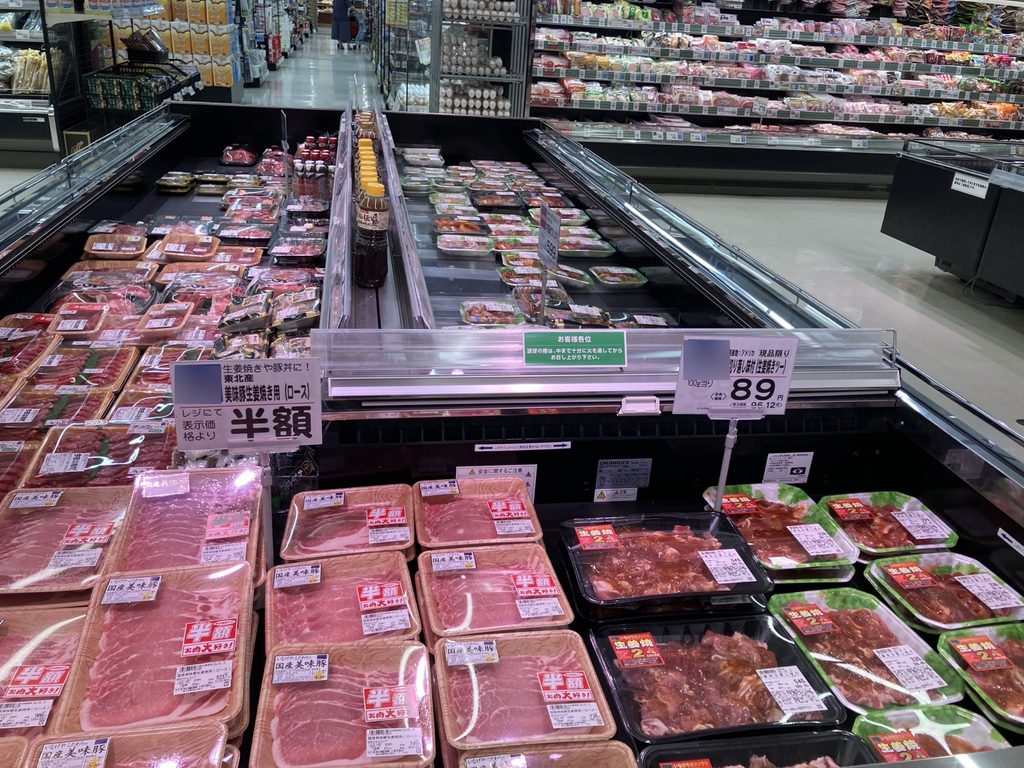
On this visit, I found a loaf of bread marked 20% off. Over in the meat section, some items were marked half price.
If you cannot read the sticker, a few expressions are useful to recognize.
“20%引” or “2割引” means 20% off.
“半額” means half price—50% off.
“50円引” means ¥50 off the original price. It does not mean the item costs ¥50.
Check which product the sticker applies to, and check the product label before buying.
Nothing special was happening. These weren’t discounts for tourists. They were simply sitting there among all the regular products.
I’m not going to tell you there’s one magic time when Japanese supermarkets always start discounting food—it varies by store, product, and day.
But the stickers themselves are a very ordinary part of supermarket life here.
It’s probably not the kind of scene you’ll find in many guidebooks.
But when you see it, you might think:
“Yeah. People actually live here.”
A loaf marked 20% off. Discount stickers are another small part of everyday supermarket life.
Some items in the meat section were marked half price on this visit.
04 — What I bought on this supermarket visit
In the end, I bought my usual sliced bread.
Nothing exotic. Nothing chosen because it looked particularly “Japanese.”
Just my regular shopping.
And I think that’s exactly the point.
Rambling Japan is about looking again at the parts of Japan that feel so ordinary to us that we barely notice them.
“Wow, there really is a lot of soy sauce.”
“Was the bread aisle always this interesting?”
“Oh, 20% off!”
Sometimes that’s enough to make an ordinary place interesting again.
Welcome to everyday Japan
If you’re traveling around Japan and happen to pass a supermarket, go inside when you have a little time.
You don’t have to buy anything unusual.
Check out the soy sauce aisle. Wander through the bread section. See if you can spot a discount sticker.
Around you, local people will be figuring out what to have for dinner tonight or breakfast tomorrow.
That’s everyday Japan.
Rambling Japan will keep looking for the parts of Japan that feel completely ordinary to us—but become surprisingly interesting when we stop and look again.
Take a small detour from the famous sights.
Welcome to everyday Japan.
If you are fitting a supermarket stop between hotel check-out and your next train, decide where your suitcase will go first. Our guide to luggage forwarding and coin lockers in Japan compares storage for a few hours with sending a bag ahead to another hotel.